
New York City is one of the most demanding environments in the world. Employees face intense workloads, long commutes, and a high cost of living. This urban landscape fuels stress, burnout, and turnover that threaten organizational success. Finding the right support system is essential to protect morale, retain talent, and build a culture where people thrive under pressure.
In New York City, an Employee Assistance Program (EAP) can offer confidential support for personal, financial, and mental health challenges. It helps employees navigate urban demands while staying productive and engaged. It’s an employer-sponsored benefit that can give your company the push it needs to thrive — 92% of workers say it’s important to work for organizations that provide mental health support.
To find the best employee assistance program in New York City, consider these factors.
1. Look for Expanded EAP Services
An expanded EAP in New York City goes beyond traditional crisis intervention. Modern EAPs recognize that mental health, physical health, and behaviors are interconnected and influenced by relationships, surroundings, and workplace culture. The scope of care should address immediate mental health needs and the everyday challenges that affect performance and well-being. Consider if an EAP offers the following services:
Short-Term Counseling Sessions
Brief, solution-focused therapy helps employees manage stress, anxiety, grief, depression, relationship issues, and workplace challenges. Master’s level counselors help develop practical coping strategies that employees can perform. The best EAP services in New York City offer multiple modalities for support:
- In-person sessions for those who prefer face-to-face connection
- Video appointments for convenience
- Phone consultations for immediate support
This flexibility ensures employees can access care based on their comfort level and schedule.
Life Coaching
Life coaches help employees achieve personal and professional goals by teaching them how to form healthy habits, learn new skills, and tap in to self-motivation and accountability. They also work with employees on career transitions, time management, work-life balance, and leadership development. Over time, employees learn to set boundaries, prioritize effectively, and navigate major life transitions with confidence.
This support is essential in a high-pressure city where ambition and burnout collide. It strengthens relationships, increases self-esteem, and creates a more purposeful approach to work and life. The support also strengthens organizational health — it helps improve employee engagement, work performance, and workplace culture.
Financial Consultations
New York City’s high cost of living creates financial stress that impacts workplace productivity. Employees worried about rent, student loans, or retirement savings struggle to focus on their work. Financial consultations offer expert guidance on budgeting, debt management, retirement planning, and major financial decisions. These sessions help employees regain control of their finances, reducing the anxiety that spills over into the workplace and affects performance.
Legal Referrals
Complex legal issues consume mental energy and distract employees from work responsibilities. Housing disputes, estate planning, family law matters, and immigration questions require expert counsel but often feel inaccessible due to cost or confusion about where to start. A quality EAP connects employees to qualified attorneys who can address their specific needs. This service removes barriers to legal support and helps employees resolve issues efficiently.
Work-Life Resources
New York City living activities — finding reliable child care, coordinating eldercare, securing affordable housing, or locating pet care — take time and energy. Work-life referrals save employees hours of research by connecting them to vetted resources and services. These referrals can reduce absenteeism caused by personal emergencies. They also help employees focus on work instead of spending business hours making phone calls and searching for solutions.
Medical Advocacy
Navigating the healthcare system can feel overwhelming. Employees may be dealing with complex insurance claims, finding specialists, or planning for transitional care. Medical advocacy support helps employees understand their benefits, appeal denied claims, coordinate between providers, and make informed treatment decisions. This guidance reduces stress and ensures employees receive the care they need without delay or financial surprises.
2. Understand the Level of Organizational Support
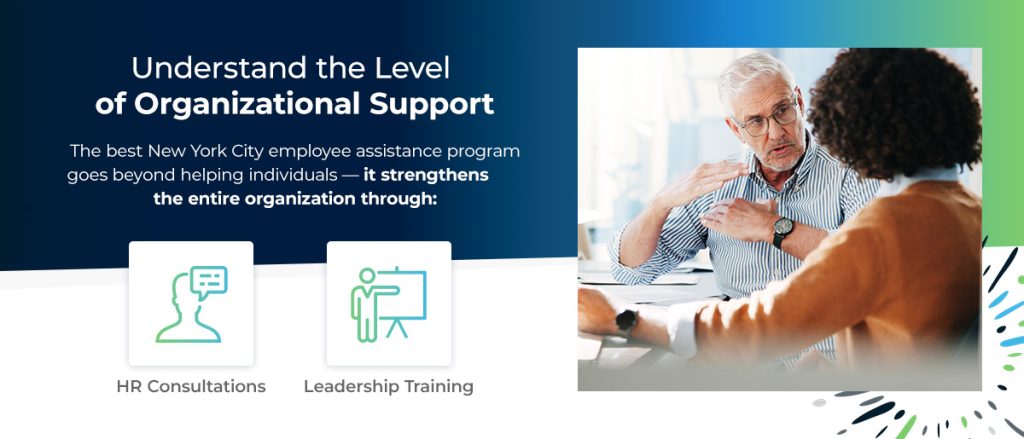
The best New York City employee assistance program goes beyond helping individuals — it strengthens the entire organization through HR consultations and leadership training. This support creates a culture that prioritizes mental health and makes employees feel supported at every level. Specifically, EAPs equip leaders to:
- Address workplace challenges.
- Develop effective policies.
- Recognize early signs of burnout.
- Have difficult conversations.
- Foster resilient teams.
Critical incident response also provides immediate support during workplace crises, traumatic events, or large-scale disruptions. For instance, when a company experiences a major organizational restructuring, trained EAP professionals can provide on-site counseling, facilitate group debriefings, and offer individual support to help employees process the changes and maintain stability.
3. Ensure Easy Access and Human Connection, 24/7/365
The best EAP in New York City offers easy access and a human connection through multiple channels. Self-scheduling tools and mobile apps let employees book appointments at their convenience. Since care is only effective if employees can access it when they need it, around-the-clock availability is essential. Crises don’t only happen during business hours, and an employee experiencing anxiety at midnight needs immediate support.
Responsiveness is equally critical. Long hold times discourage utilization, and short wait times demonstrate a commitment to accessibility. Look for providers with proven track records of quickly connecting employees to live clinicians.
4. Review Ongoing Promotional Materials
Even the most comprehensive EAP is useless if employees don’t know about it. The engagement gap — the difference between availability and utilization — remains a workplace challenge. Only 59% of employees say their employer regularly provides information about available mental health resources. Providers who offer onboarding toolkits, regular newsletters, promotional posters, and educational webinars keep EAPs in New York City top of mind for employees.
These materials should be customizable, easy to distribute, and designed to normalize help-seeking behavior.
5. Consider Customer Satisfaction Rates
High customer satisfaction rates and proven clinical outcomes are the true markers of an EAP’s value. Look beyond promises and examine the evidence. What percentage of clients would recommend the provider to others? How quickly are issues resolved? Are employees reporting meaningful improvement after using services?
Measuring impact, such as issue resolution within a few sessions, proves return on investment and demonstrates tangible results. When evaluating providers, prioritize those who transparently share satisfaction data and clinical outcomes.
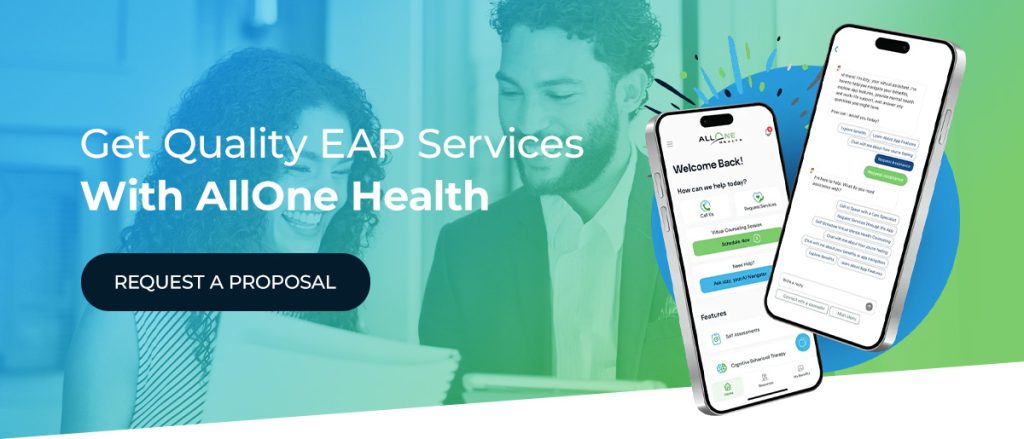
Get Quality EAP Services With AllOne Health
The right EAP partner delivers comprehensive care, organizational support, and proven results. AllOne Health offers exactly that — a whole-person, whole-organization approach trusted by more than 10,000 organizations nationwide.
Our 97% client recommendation rate reflects the quality of our services. With a network of over 60,000 master’s-level counselors and clinicians, employees can access same-day mental health support, life coaching, financial consultations, legal referrals, and work-life resources.
The hybrid model combines in-person care with virtual options to ensure employees receive support wherever they are, even in areas with provider shortages. When people are supported, they do their best work. If you’re ready to see the effects, request a proposal today.