

For decades, mental health was brushed under the carpet in the workplace. Employees were often made to feel ashamed of asking for help, and employers were rarely prepared to help them if they did. Fortunately, that has now largely changed, with many employers seeing the value in supporting their employees’ mental health. However, this is only the first step toward employees receiving the help they need, when they need it.
An employee assistance program (EAP) can help employees feel comfortable asking for help. By providing your employees with support in other areas of their life, from financial coaching to legal consultations, you can support their mental well-being. The results are undeniable, with employees twice as likely to report no issues with burnout or depression when they receive mental health support from their employers.
Following the best practices for implementing a new EAP program requires preparation and dedication, but it will help your employees get the most out of their EAP.
1. Conduct a Needs Assessment
While many employers believe that an EAP is only there to deliver mental health support, it often goes beyond this. Research shows that of employees who benefit from an EAP, 51% sought legal support, 23% requested financial guidance, and 21% received life assistance.
So, you should first determine your employees’ primary needs that aren’t being met and why. This could give you an idea of which services to focus on in your EAP, such as:
- Financial coaching.
- Legal consultations.
- Short-term counseling.
- Life coaching.
- Work-life resources and referrals.
- Organizational health.
- Medical advocacy services.
It’s also good to find out how your employees feel about personal wellness support programs. Ask whether they would use one, what areas of whole health are most important to them, and how they’d prefer to use it. These answers can help you tailor your EAPs delivery to best suit your employees.
2. Define Your Goals and EAP Services
Once you know what your employees’ needs are and what’s preventing them from being met, you can create goals to overcome those barriers. Your goals should be clear and easy to measure. Some common goals that organizations create when implementing an EAP include reduced employee turnover, lower absenteeism rates, and improved employee satisfaction self-assessments.
Whichever goals you choose, review them regularly to assess whether you’re on track to meet them. The services included in your EAP affect which goals you can achieve, so you’ll need to choose these effectively, too.
3. Choose Your EAP Provider
The next step is to decide how you’ll deliver your EAP services, which could be through in-house services, external services, or a mixture of the two. In most cases, employers will work with an external EAP provider, as they can provide a more comprehensive program. A great EAP provider will have:
- An established partner network, which allows them to deliver fast and high-quality services to your employees.
- A positive track record of delivering EAPs that help employees and deliver great value for money.
- An immediate-access crisis support service for urgent employee needs.
You also need to make sure that your EAP provider can deliver the key services your employees need.
4. Create Your EAP Policy and Guidelines
Next, define the finer details of your EAP plan, such as the referral process that will allow employees to access the EAP services. You’ll also have to decide how employees book their appointments and attend them. Some employees may prefer to book appointments online and attend virtually, while others may want to create an appointment over the phone and attend in person. Many organizations will offer their employees both options to ensure all needs are being met.
You’ll also need to consider how confidentiality is kept and what the eligibility criteria are for each service. If you’re working with an EAP partner, they can help you write your EAP policy and guidelines.
5. Train Your Managers
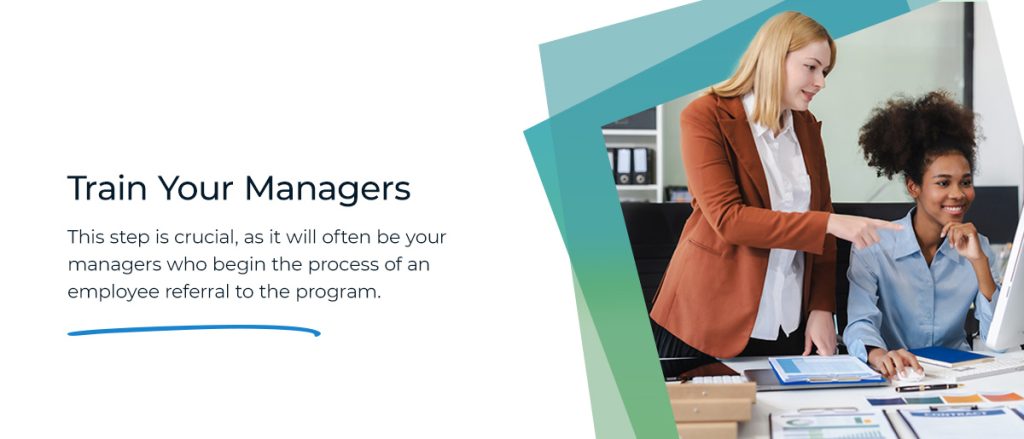
Once you’ve planned your EAP, you can start preparing your management team for its introduction. This step is crucial, as it will often be your managers who begin the process of an employee referral to the program.
To prepare your managers for the EAP’s introduction, you should:
- Tell them what the EAP is and the services it includes.
- Explain when employees may need it.
- Teach them how to notice the signs of an employee who could benefit from the program.
- Train them in the referral process.
6. Promote Your EAP
Next, let the rest of the team know about the EAP. Tell them about the benefits it can deliver and how they can access the services. You can do this by promoting it via:
- Internal web pages.
- Company email.
- Social media.
- Employee town halls.
- Webinars.
- One-to-one or small team meetings.
If your EAP also covers your employees’ families, it’s important that you send a letter to their homes, too.
Provide the opportunity for your team to ask follow-up questions, so they have all the information they need to enjoy the full benefits of the EAP. They could also inquire about something you haven’t covered in your guidelines or policy.
7. Launch Your EAP
Once your employees are aware of the program, you can launch your EAP. This means your employees can now access the EAP services, and your managers can utilize the wide range of organizational support tools available to them.
However, to get the most out of your EAP, the program launch should go beyond an initial launch campaign. It should be viewed as a partner for mental health at work, and be part of any larger initiatives for a healthy employee experience, improved engagement, team-building and connection. The EAP offers a variety of expert guidance and resources, and those tools can be used to address specific challenges or common issues that may be impacting people across the organization. Encourage team leaders to share stories of times when they needed help, as this can help employees feel comfortable asking for help from the program.
Include EAP information and resources whenever you onboard a new member. Managers should also receive regular training on how to spot the signs of an employee who might need support from the EAP.
Finally, integrate your EAP with your existing HR systems to ensure there’s no disconnect of information between the various platforms. Many EAP providers will help with this process for a smooth integration.
8. Monitor and Improve Your EAP
Once your EAP is live, continue to evaluate it. Monitor how your employees use it, which services get used most often, and the referral methods being used. Asking your employees how they feel about different aspects of the program can deliver valuable insights.
With this information, you can take steps to improve your EAP. For example, you might adjust:
- Which services are included in the EAP.
- How employees are referred to the EAP services.
- How managers are trained to spot an employee who could benefit from the EAP services.
- How employees learn more about the program or hear updates.
Find and Implement Your Ideal EAP
From mental health support and real-world advice to creating a company culture that encourages asking for help, EAPs can deliver changes that massively improve your employees’ well-being. For your employees to gain the full extent of these benefits, you need to find the perfect EAP and implement it effectively.
At AllOne Health, our EAP is comprehensive, convenient, and designed to deliver the best for your employees. With over five decades of delivering employee wellness solutions, we understand how important it is to support every aspect of your team’s well-being. This, and our extensive partner network, is why we’re trusted by thousands of clients across the United States.
To find out more about our EAP and how you can seamlessly implement it in your organization, contact us today.