
Boston, Massachusetts’s economy thrives on innovation across technology, healthcare, and education sectors. Yet sustaining this growth requires more than industry expertise — it demands a resilient, supported workforce. Poor mental health and burnout are some of the known predictors of employees leaving their organizations. As of June 2026, about 3.2 million workers in the U.S. have decided to quit their company, while in Massachusetts, the number of employees quitting averages 55,000 per month.
An effective employee assistance program (EAP) in Boston can help organizations address workforce challenges, helping employees manage work and personal life effectively. Over 90% of workers value organizations that prioritize emotional and psychological well-being. When employees have access to the support they need, employers benefit from higher engagement and productivity.
To ensure employees get the most out of their EAP benefit, consider the following criteria when selecting a service.
1. Look for Extensive EAP Services
Comprehensive support extends beyond mental health counseling. Mental and physical health influence each other significantly. For instance, depression increases the risk of chronic conditions, including heart disease, diabetes, and stroke. The best EAP in Boston addresses whole-person well-being rather than isolated challenges. Look for the following EAP services when reviewing each provider:
Short-Term Counseling
Employees overwhelmed by personal or work-related problems often struggle to perform their duties effectively. Short-term counseling helps employees and their families manage stress, resolve conflicts, and navigate anxiety and depression through focused, goal-oriented sessions. This approach addresses specific issues within a limited number of sessions, making it time-efficient for employees with demanding schedules. When evaluating providers, consider those offering access to master’s-level counselors and flexible modes of communication.
Life Coaching
Similar to counseling, life coaching is solution-focused and time-limited. However, while counselors focus on an employee’s emotional healing and mental health concerns, certified life coaches help employees set and achieve personal and professional goals. They establish attainable benchmarks that enable employees to change aspects of their lives and overcome obstacles. They leverage an employee’s personal strengths for long-term growth and fulfillment.
Life coaching sessions can be ideal for those experiencing significant life changes. When reviewing Boston EAP providers, consider the specific support their life coaches offer. The effect goes beyond personal fulfillment. Effective programs improve employee engagement, work performance, and organizational culture.
Financial Consultations
Financial stress takes a toll on workers, leading to mental health issues, lack of focus, lower morale, and physical health problems. Financial needs that impact employee performance the most include:
- Emergency expenses
- Basic living expenses
- Debt repayments
- Retirement savings
- Medical expenses
- Student loan payments
Financial consultations help employees resolve financial issues through different means, such as budget coaching, financial planning, and debt management. When evaluating providers, consider the level of service they provide to help employees address financial challenges.
Legal Referrals
Through legal referrals, employees and their families can connect with attorneys to address personal legal matters. They can help employees address issues regarding a range of legal topics, from family law and estate planning to identity protection and dispute resolution.
Communications remain confidential unless the law requires disclosure. Services can also include assistance with relevant document preparation.
Work-Life Resources
Work-life specialists help employees obtain resources and referrals for matters affecting their daily lives, such as:
- Finding quality childcare arrangements.
- Supporting aging family members.
- Veterinary referrals and boarding services.
- Navigating the adoption process.
- Locating appropriate housing accommodations.
- Commuting solutions and vehicle needs.
- School selection and educational planning.
These services enable employees to manage the demands of home and work life. When childcare arrangements fall through or family members become ill, such challenges impact an employee’s ability to perform well. Consider the specific types of referrals providers can make when reviewing their services.
Medical Advocacy
Employee healthcare confusion is widespread — about 40% of employees don’t know where to get information on health plan selection, and 44% regret healthcare decisions made from inadequate guidance. The healthcare system’s complexity makes it challenging for workers to understand their benefits fully. Medical social workers have training in helping people navigate this complexity.
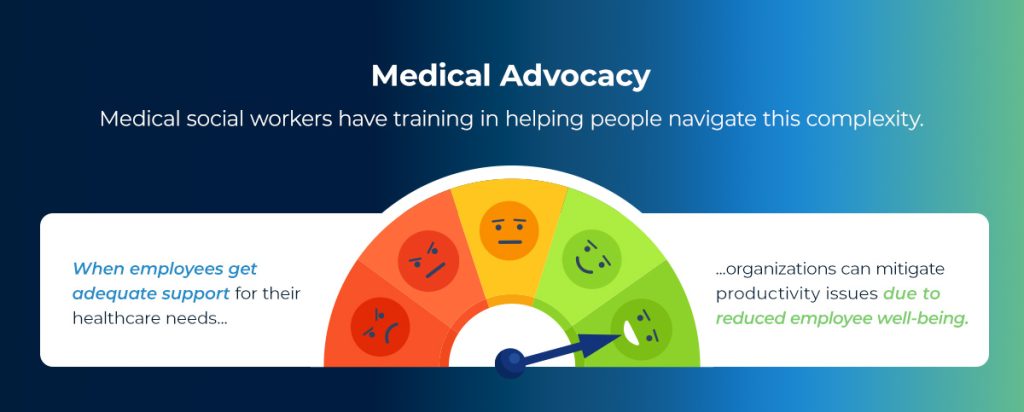
For instance, they help employees understand their coverage and can explain claims. They can also secure doctor referrals and coordinate medical equipment. Most importantly, they advocate for the employee throughout the healthcare journey. When employees get adequate support for their healthcare needs, organizations can mitigate productivity issues due to reduced employee well-being.
2. Consider the Level of Organizational Support
EAP services in Boston should support HR teams and leadership, not just employees. Account managers should have the necessary organizational knowledge and clinical expertise to work with them. They can advise managers on when to make formal and informal referrals and secure training programs for employees. Account managers also serve as tremendous resources for on-site critical incident support.
Even without a crisis, leaders should be able to rely on the EAP service to adequately support employees. When evaluating providers, consider those offering unlimited telephone consultations.
3. Ensure Easy Access to Human Connection 24/7
EAP services are only effective when employees can reach them during moments of need — emergencies don’t follow business hours. Assistance should be available at any time of day, including weekends and holidays. Real human professionals must be able to guide them to the appropriate next steps, whether they need short-term counseling sessions, legal consultations, financial coaching, or in-the-moment support.
The provider should be able to accommodate different employee communication preferences, such as:
- Phone sessions
- Video sessions
- In-person sessions
- Live chat sessions
- Asynchronous messaging
A provider with a member portal can make it easier for employees to access the EAP services.
4. Review Existing Promotional Materials
Promotional materials help build employee awareness and engagement with available resources. Workplace benefits often confuse employees, and educational content helps them understand what’s available. Research shows that 73% of employees want more education on company benefits, with Gen Z least likely to report feeling educated about their options. These materials can include:
- Articles: Written content addressing common workplace challenges
- Podcasts: Audio programming on mental health and well-being topics
- Lifestyle assessments: Tools helping employees evaluate their current well-being
- Soft skill courses: Training on communication, stress management, and resilience
- Monthly newsletters: Regular updates on available services and timely topics
- Webinars: Interactive sessions on relevant well-being subjects
When evaluating providers, review their promotional resources. Strong educational materials keep your EAP top-of-mind and demonstrate the provider’s commitment to employee engagement.
5. Check for High Customer Satisfaction Rates
Customer feedback reveals how well an EAP performs in real-world applications. Consider any customer surveys or ratings the provider can share. Determine what feedback past or current customers have provided — for instance, whether account managers have been helpful and effective, and whether referrals prove genuinely useful.
If possible, identify the utilization rate among other customers. A high utilization rate signals relevance and accessibility, while a low utilization rate can indicate poor awareness, inadequate services, or difficulty accessing support. Platform reviews also matter, as systems should be intuitive and easy to navigate. Employees who struggle with technology barriers are less likely to seek the support they need.
Access Comprehensive EAP Services in Boston Through AllOne Health
AllOne Health delivers an EAP that blends human care with digital speed — offering fast access to support, real human connection, and whole-person services. Your employees gain instant access to counseling, coaching, crisis support, and comprehensive work-life resources.
Live clinicians are available 24/7 for urgent needs, while convenient self-scheduling makes virtual counseling sessions simple. Employees can connect through live chat with EAP specialists, choose between virtual or in-person counseling options, and access legal, financial, and work-life resources whenever they need them.
We’re trusted by more than 10,000 organizations nationwide and supported by over 60,000 master’s-level counselors and clinicians. If you’re looking for comprehensive EAP services in Boston, we can help. Request a quote today to get started.