

Employee stress is becoming a critical issue for human resources (HR) leaders. Every day, organizations face rising turnover, declining engagement and the complex ripple effects of workforce fatigue. Leaders work hard to build strong cultures, but operational pressures, limited resources and shifting employee expectations make it harder to keep the balance. HR professionals are expected to protect both organizational performance and employee well-being, often with competing priorities and urgent timelines.
Supporting employee well-being starts with understanding how to help employees deal with stress by creating sustainable systems that align with organizational goals. This is where a proactive, strategic approach to workplace stress management becomes essential for lasting impact.
Employee Stress in Today’s Workplace
Workplace stress is surging to crisis levels. One study reports that 66% of people in the workplace meet the criteria for burnout. The share of job reviews citing burnout has increased by 32%, the highest level in a decade.
These trends affect more than individuals. Unchecked stress erodes workplace productivity, as fatigued employees make more mistakes, respond more slowly and often struggle to focus. It also damages retention, as employees may consider quitting due to their mental health. A 1,000-employee firm can lose $5 million annually from employee burnout through turnover, absenteeism and diminished performance.
Corporate culture suffers too. Global employee engagement has already dropped to 21%, which directly impacts the culture. In workplaces where stress is pervasive, communication breaks down, trust erodes and collaboration suffers. Team members may be hesitant to speak up when they struggle, which can degrade innovation and morale. Organizational culture becomes reactive and crisis-driven rather than proactive. The stakes are clear. Ignoring stress is no longer viable. Addressing it is essential for people, operational health and your organization’s future.
Top Causes of Employee Stress
Employee stress rarely stems from a single issue — instead, it builds from a combination of workplace pressures and personal factors. These pressures impact every level of an organization, from entry-level to senior leadership:
- Heavy workloads: Unrealistic deadlines and heavy workloads create sustained pressure and limit recovery time.
- Lack of balance: A lack of work-life balance often stems from extended work hours or blurred boundaries.
- Poor communication: Unclear expectations and poor communication increase frustration and uncertainty.
- Limited growth opportunities: A lack of career growth opportunities can lead to disengagement and stagnation.
- Inadequate support: Poor managerial support leaves employees feeling undervalued and isolated.
- Job insecurity: Organizational changes and job insecurity can create fear and instability.
- Financial stress: Benefit gaps and other financial stressors can impact both the emotional and mental health of employees.
4 Proven Strategies to Reduce Employee Stress
While mental health management comes down to each individual using the tools available to them, employers can learn how to help employees reduce stress by knowing which tools to offer. Finding sustainable workplace stress reduction programs that fit your workforce’s needs requires a holistic approach that addresses layered challenges with strong leadership while providing flexibility and resources. When employees manage their stress effectively, they perform better and develop trust with their workplace, while your organizational culture thrives.
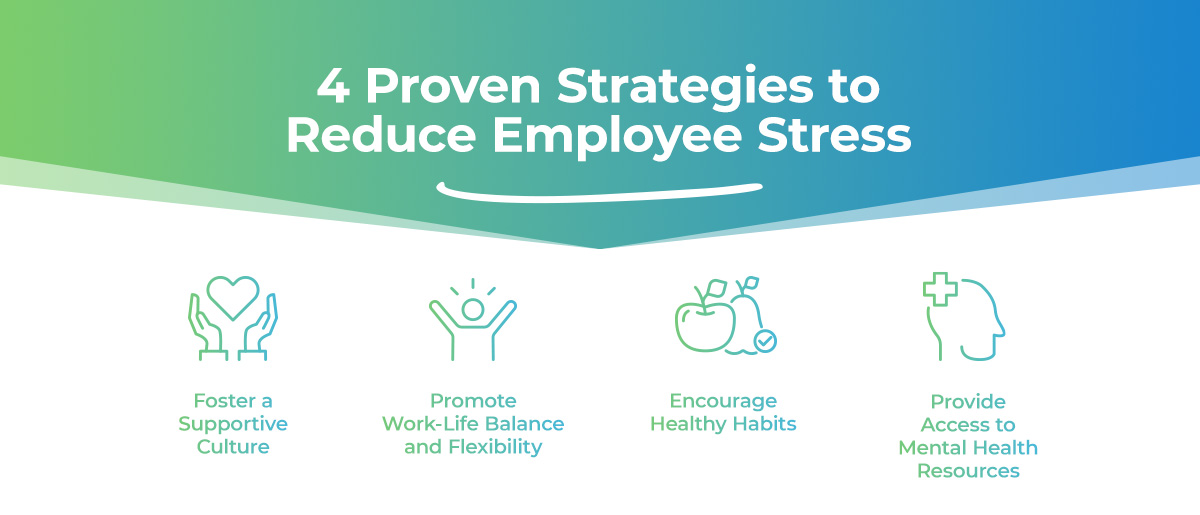
1. Foster a Supportive Culture
A supportive culture is the foundation, where clear communication, realistic expectations and transparent leadership build trust. Employees who feel heard and valued often report lower stress levels and higher engagement. Regular managerial feedback, recognition for hard work and collaborative decision-making foster a sense of psychological safety that helps employees navigate pressure without feeling overwhelmed.
2. Promote Work-Life Balance and Flexibility
Flexible work options, manageable workloads through improved job design, and a predictable schedule help employees keep control over their time. Encouraging boundaries and respecting personal time are essential for maintaining well-being. Managers should also implement overtime policies to prevent overwork, which can lead to burnout. A balanced workforce is more productive and creative, bringing a positive ripple effect to the business.
3. Encourage Healthy Habits
Organizations promoting healthy habits foster long-term resilience. Access to wellness programs, movement breaks, ergonomic workspaces and nutritional resources like healthy snacks supports physical and mental health. These small, consistent efforts reduce chronic stress and increase energy levels.
4. Provide Access to Mental Health Resources
Professional mental health support with an employee stress assessment provides employees with the critical tools they need to manage stress effectively. Confidential counseling, coaching and educational resources help employees address challenges early. Normalizing mental health care reduces stigma, encourages team members to use available services and strengthens overall well-being.
The Power of a Stress Management Program
High stress levels drain energy, reduce focus and weaken employee engagement. When they operate under chronic strain, their productivity drops over time. These effects ripple across the entire organization, undermining growth and culture. A sustainable solution requires more than surface-level perks or temporary fixes. Effective stress reduction looks at the whole picture of employee health, including mental, physical, emotional, social and financial well-being. Addressing these interconnected factors helps employees build the capacity to perform at their best.
A holistic health strategy builds resilience, strengthens trust and fosters a culture where people feel supported, not depleted. Employee assistance programs (EAPs) support workplace stress reduction by connecting employees with personalized resources that target immediate stressors and long-term happiness. A comprehensive EAP often includes:
- 24/7 access to Master’s level counselors and counselors for immediate help.
- Work stress management tools that address stress before it affects health or performance.
- Legal, financial and daily living support to reduce external stressors.
- Structured support to manage conflict, trauma and add-on services for crisis management.
- Educational tools, self-guided programs and coaching to build resilience.
- Expert guidance to help managers support teams effectively.
Tracking Stress Reduction and Well-being
Measuring the impact of EAPs ensures the program delivers results. Tracking engagement, utilization and outcomes helps HR teams refine strategies, target support and demonstrate the return on investment. Data-driven insights reveal trends and guide resource allocation to strengthen long-term wellness initiatives. Key ways to check EAP success include:
- Evaluating engagement rates through different access points, such as mobile, app, live support or scheduled counseling.
- Measuring response times by tracking how quickly employees can reach a clinician or support resource.
- Using anonymized, aggregate data to measure improvements in stress, anxiety or related issues over time.
- Comparing absenteeism, presenteeism and turnover rates before and after program implementation.
- Collecting confidential employee feedback on ease of access, perceived value and overall support.
Build a Healthier Organization With AllOne Health

Reducing stress is more than a wellness initiative. It’s a strategic imperative. By prioritizing whole health support, your organization fosters an environment where employees thrive, innovation flourishes and performance remains robust, even in challenging circumstances.
At AllOne Health, we’ve been driving positive change for businesses for over 50 years. With compassionate care, innovative technologies and expertise, we deliver EAP that blends human care with digital speed, so your team is empowered to access support in the way they need it. With the AllOne Health App, your team can access on-demand digital tools, self-schedule appointments and access live human support.
Request a demo or proposal today to learn more about our reimagined EAP solution.