
An Employee Assistance Program (EAP) is a workplace benefit that helps employees manage everyday challenges that could negatively impact work or life. EAPs provide easy access to counseling services to address mental health concerns and information and referrals to help with life’s other challenges.
Comprehensive EAP services also support organizational health by offering professional development and training programs to improve company culture and organizational success.
We created this guide to help organizations gain a deeper understanding of what employee assistance programs are, the services they include, and what to look for when selecting the right EAP provider to meet your organization’s needs.
A Closer Look at Employee Assistance Programs
The U.S. Office of Personnel Management (OPM) describes an employee assistance program as a voluntary, work-based program offering free and confidential assessments, short-term counseling, referrals, and follow-up services to employees with personal or work-related problems.
EAP services address a broad and complex body of issues that negatively impact mental and emotional well-being, such as alcohol and substance abuse problems, stress, grief, family problems, and psychological disorders.
Managers and supervisors can also consult with their EAP provider for guidance on referring employees to the EAP program, managing their performance, or finding support with organizational challenges.
Many EAPs also provide services to help organizations and employees prevent or cope with workplace violence, trauma, and other emergency response or critical incident response situations.
Understanding the Need for EAP Services
The premise for EAPs is easy to understand: When employees have the support they need for managing life’s challenges, organizations are more likely to have an engaged and productive workforce. And when organizations, HR departments, and leadership teams have the support they need, they are more likely to improve organizational performance and success.
Although EAP benefits have been around for decades, recent studies underscore the ongoing need for mental health support, financial wellness programs, and treatment for drug and alcohol concerns.
Fast Facts: Mental Health in the U.S.
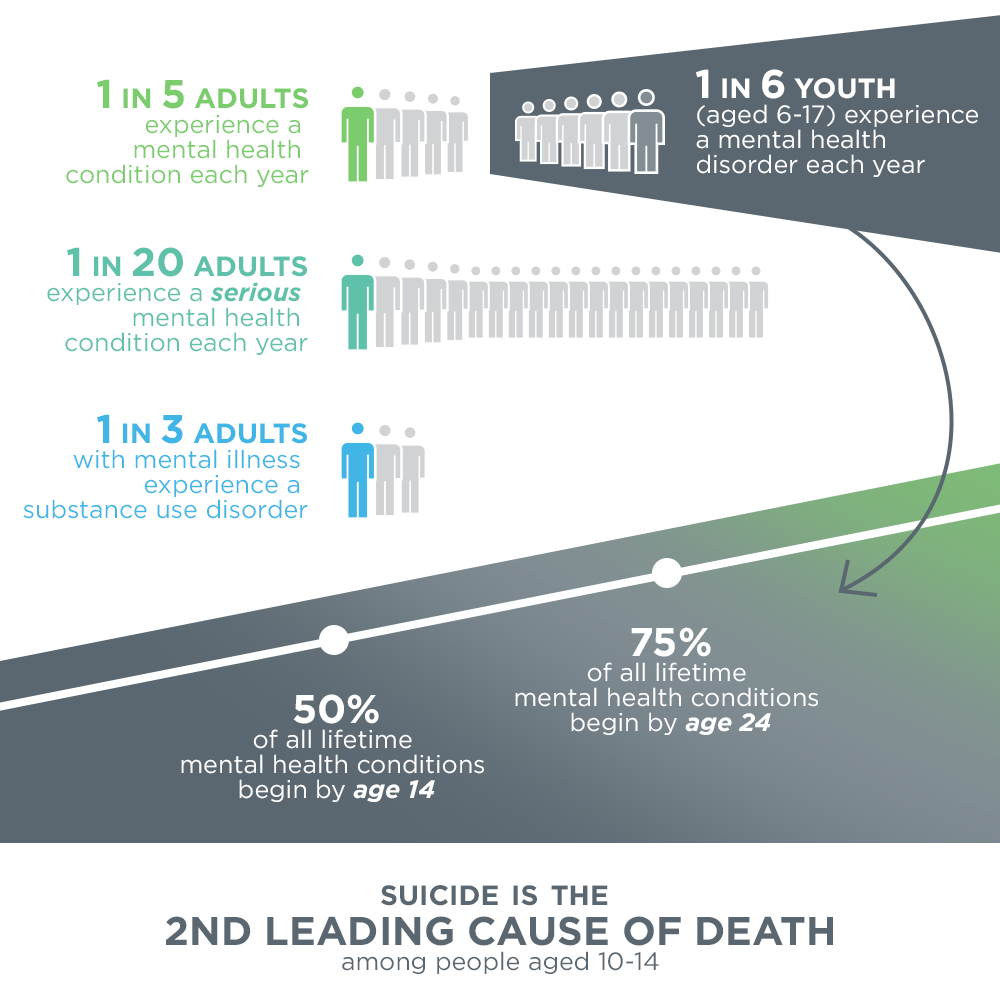
Source: NAMI
In addition, 73% of Americans rank their finances as life’s No. 1 stressor, according to a CreditWise survey. However, financial literacy among U.S. adults has fallen 19% over the past decade.
Growing Need for Mental Health Services
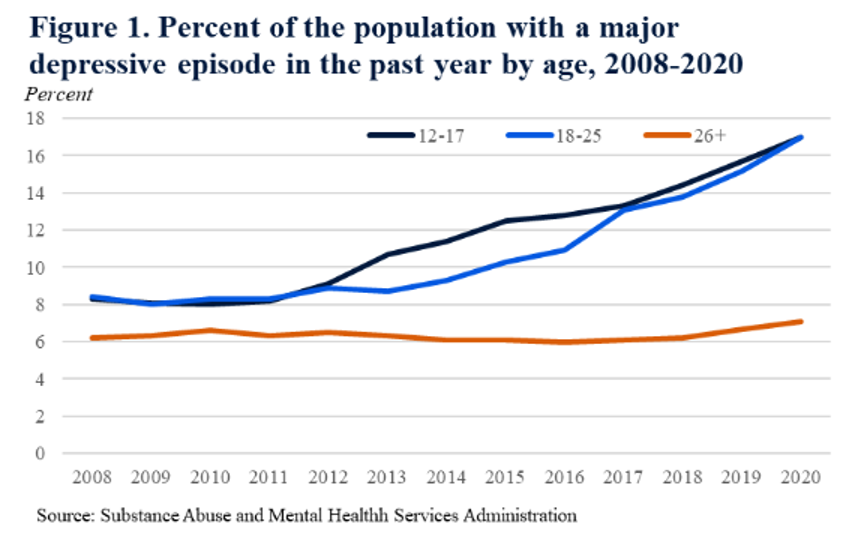
While the pandemic has had a tremendous impact on our collective well-being, studies confirm that depression has been a growing concern among the U.S. population for more than a decade, especially among young people.
As discussed in a brief issued by the White House Council of Economic Advisers, depressive episodes experienced by teens and young adults increased dramatically between 2008 and 2020. As shown in Figure 1, rates increased by 90 percent among adolescents (ages 12 to 17). For young adults (ages 18 to 25), rates increased by 81 percent. During roughly this same period, suicide death rates among children and young adults (ages 10 to 24) increased by 47 percent.
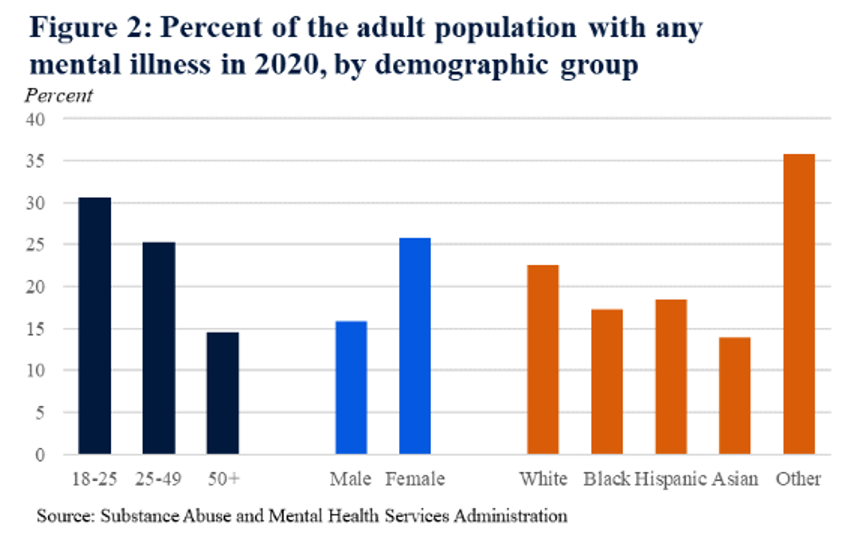
But it’s not just young people facing these challenges. In 2019, more than one in five adults age 18 or older were classified as having a mental illness. More than 13.1 million adults (or 5 percent) had severe disorders that substantially interfered with or limited one or more major life activities.
Figure 2 shows the percentage of adults who experienced any mental illness in 2020 by various demographic categories. Rates were highest among young adult females (ages 18 to 25) and people who reported their race as “other.”
According to a study released by The Employee Assistance Trade Association (EAPA), EAP services provide value in the following ways.
- By offering access to mental health support through no-cost counseling for employees and their family members.
- By creating healthy workplaces by offering behavioral health consultation to the organization and reducing behavioral health costs.
- By improving the bottom line through increased worker productivity and reduced business costs.
How EAPs Work
While an employee assistance program is a benefit provided by the employer, its services are administered by a third party. Any personal information an employee shares with EAP providers remains private and confidential, following HIPAA privacy rules and federal regulations.
Employee assistance programs can help employees address the following:
- Mental health issues, including stress, anxiety, depression, family or workplace conflicts, substance misuse, and related personal concerns.
- Legal issues, including wills, estate planning, divorce, and real estate.
- Financial issues, such as learning how to budget, pay off debt, plan for retirement, and prevent or recover from identity theft.
- Work-life responsibilities, such as childcare, eldercare, adoption, or services to support a family member with special needs, such as education, transportation, and housing. EAP services also include pet care referrals.
Many employee assistance programs also provide training programs and organizational development. Some EAP providers may offer crisis management.
What Enhancements Could Strengthen the EAP?
While employee assistance programs can empower people to manage many of life’s everyday challenges, they are not designed to address larger, systemic issues that are embedded in the organization itself, such as ineffective leadership, an unhealthy workplace culture, short-staffing, and organizational bottlenecks.
Organizational development can be a perfect enhancement to employee assistance programs by addressing the underlying concerns that may be impacting an organization’s health and culture.
What Makes an EAP Effective?
An effective EAP is one that meets the needs of the organization and its employees. it should also include various promotional materials to build employee awareness and engagement.
A comprehensive program also includes the services of a dedicated account manager who partners closely with human resources and leadership teams to make sure the organization has the support it needs.
To learn more, read our guide to finding the best employee assistance programs.

The Benefits of Expanded EAP Services
We know that mental health, physical health, and behaviors are all intertwined, and they’re influenced by relationships, work, surroundings, and other aspects of life. To address these needs, AllOne Health brings a whole health approach to EAP programs, with expanded services to address what’s most important right now:
Short-term Counseling Sessions
Mental health therapy sessions can help employees and their family members manage stress, anxiety, grief, and depression, resolve conflict, improve relationships, overcome personal problems related to substance misuse, and address everyday challenges that interfere with work-life balance.
When an employee is overwhelmed by personal or work-related stress, they can’t perform their duties effectively. This can lead to decreased productivity, increased absences, safety issues, accidents, and perhaps workers’ compensation.
By supporting mental wellness, everyone benefits. Stronger employees lead to stronger families and stronger organizations while reducing workplace stress and employee turnover.
Life Coaching
A life coach has training in helping people achieve more by forming healthy habits, learning new skills, and tapping into self-motivation and accountability.
With the guidance of a life coach, employees can reach new goals, manage life transitions, and improve stress, time management, and overall mental wellness.
Coaching can also help employees succeed in intangible ways by helping them strengthen relationships, increase self-esteem, improve work-life balance, and live a more purposeful life.
Life coaching can eventually impact organizational health by promoting employee engagement, improving job performance, and enhancing company culture, which, in turn, can increase employee well-being and ROI.
Financial Consultations
Left unaddressed, financial stress can negatively impact mental health, physical health, and overall well-being. A certified financial counselor can provide budget coaching, financial planning, and consultations on bankruptcy, homebuying, debt management, taxes, identity theft, retirement planning, and saving for college.
When employees have the support they need to resolve financial concerns, they’re also more likely to improve their overall health and mental wellness.
Legal Consultations
Employees can connect with a qualified attorney for a consultation on personal legal matters, such as estate planning, wills, real estate, bankruptcy, divorce, custody agreements, eldercare, and adoption, helping them improve their outcomes on legal and family issues.
Work-life Resources and Referrals
By connecting with a work-life specialist, employees can receive resources and referrals for childcare, eldercare, pet care, and adoption. They can also receive special needs support, including referrals for education, enrichment activities, housing, transportation, and community resources.
When juggling work-related issues and family responsibilities, these EAP benefits can help employees with stress management and better work-life balance.
Medical Advocacy
A medical social worker has specialized training to help employees navigate through the healthcare system and understand health plans. This professional can determine what is included in a benefits package or health insurance plan, explain claims and coverage, and secure doctor referrals, medical equipment, transportation, and options for transitional care or discharge.
Organizational Health
AllOne Health employee assistance programs include employer services to support human resources and leadership teams, including unlimited telephone consultations with their account managers.
Account managers play an important role in helping workplace leaders understand when to make “informal” and “formal” referrals:
- An informal referral is a casual reminder that the employee assistance program is here to help.
- A formal referral is when a manager directs someone to seek a referral, often due to behavioral problems, performance issues, or a violation of workplace policies.
Account managers can also arrange training programs to support employees and leadership teams. The training programs discuss work-life balance, caregiving, adjusting to change, improving communication, overcoming compassion fatigue and burnout, navigating conflict, and promoting diversity.
Account managers can also help organizations by providing a Critical Incident Response (CIR) or a Critical Incident Stress Debriefing (CISD). These critical response services can help organizations and employees cope with natural disasters, an employee illness or death, workplace violence, layoffs, or other traumatic events that impact the workplace.
AllOne Health also offers expanded Organizational Development solutions for Diversity, Equity, Inclusion (DEI), Executive Coaching, Leadership Development, Group Work & Team Development, Change Management, and Organizational and Cultural Assessment.
What to Look for in an EAP Provider
AllOne Health employee assistance programs offer a wide range of resources and support services to address whole health, strengthen overall well-being, and build connection and engagement throughout an organization.
Here are some considerations when selecting an EAP service:
Real Solutions for Today’s Concerns
Every year, AllOne Health surveys its EAP customers to learn more about the “State of Mental Health at Work.” The following chart summarizes the top referral types in 2022.
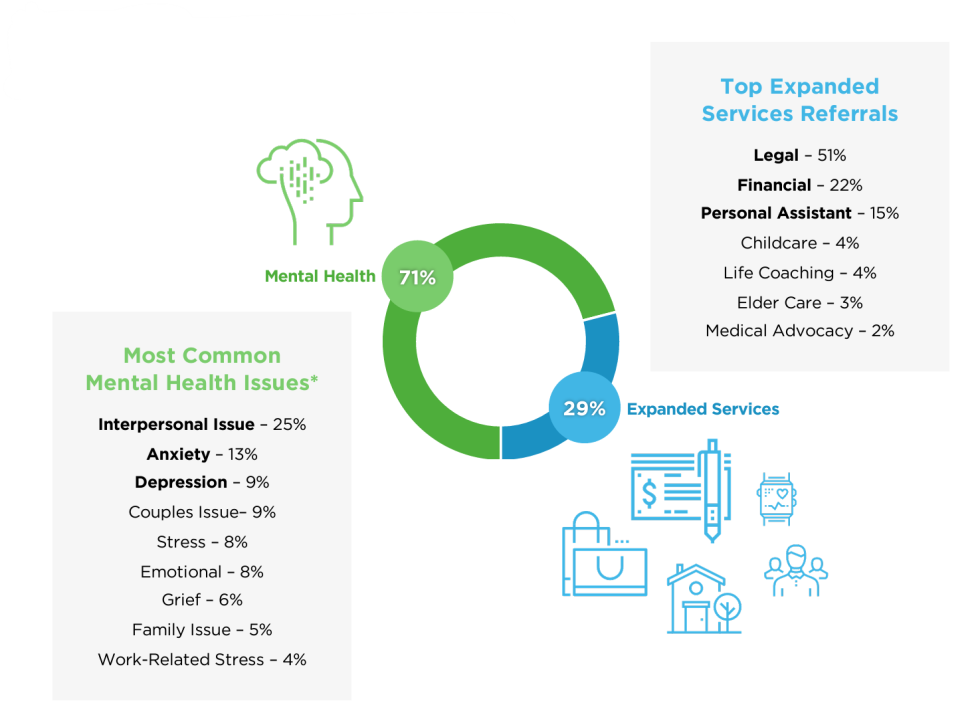
Mental health services were our most common referral, at 71%. The majority of these issues stemmed from interpersonal concerns, anxiety, depression, and couples issues. The remaining 29% of our were for expanded services, such as legal and financial consultations or a personal assistant.
Digital mental health solutions remain popular and are here to stay. AllOne Health offers “care your way.” Here are the latest trends, as reported by AllOne Health members.

Promotional Materials
To make sure everyone is aware of their EAP services, communication is key. AllOne Health offers a variety of promotional tools and resources throughout the year to promote employee awareness and engagement.
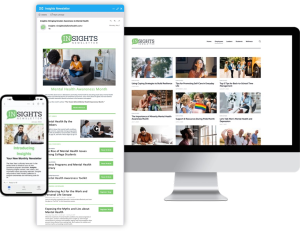
Insights is a monthly newsletter sent to employees to make them more aware of their EAP service. Each month, the newsletter discusses a different theme related to whole health. Throughout the year, the newsletter provides helpful information on mental health, physical health, financial wellness, family care, lifestyle support, and organizational health.
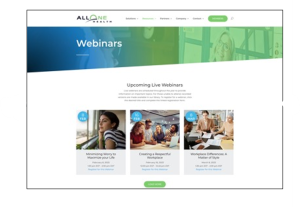
Webinars are scheduled throughout the year to provide helpful information on topics related to work-related issues, prevention, and health services.
AllOne Health’s in-house clinicians produce and prepare these webinars. Employees can register for them from the Insights newsletter and the AllOne Health website.
AllOne Health is also active on LinkedIn and Twitter, providing posts that link people to our latest blog posts and Insights articles and videos.
Dedicated Account Managers
Human resources professionals and leadership teams sometimes face challenging and unpredictable workplace behaviors. AllOne Health account managers can provide management consultations where they evaluate a situation and apply clinical and organizational knowledge to address employee activity, performance, conduct, and potential risks when determining appropriate next steps.
Options can include referring an employee to the employee assistance program through an informal or informal referral, recommending training programs to help develop needed skills, or offering specialty services such as conflict resolution intervention, executive coaching, team building, etc.
The account manager can also help leadership teams with job coaching and “constructive confrontation.” This is the art of documenting a problem, providing coaching sessions, and then monitoring change.
The account manager can also provide advice on handling substance abuse and impairment and managing workplace stress. While it’s not a supervisor’s job to diagnose a substance abuse issue, it is important to be able to recognize potential red flags that may indicate something is wrong, such as accidents with equipment, odd speech patterns, poor coordination, inattentiveness, moodiness, and poor work performance.
On-demand Manager Resources
The EAP portal provides online access to a variety of management resources, including articles, videos, and online courses written specifically for managers and supervisors. These are located under the “careers” section.
Workplace Trauma Response
Sometimes a traumatic event impacts the workplace. This could include the death of an employee, an act of violence, or a natural disaster, such as flooding, tornado, wildfire, or hurricane.
The AllOne Health employee assistance program provides support when traumatic events impact the workplace. “Debriefings” are structured group meetings that provide a forum for participants to process their thoughts, reactions, and feelings resulting from a traumatic incident or workplace distress. These meetings are usually scheduled within 24 to 72 hours after an incident.
Debriefings provide an opportunity for education, venting, and support. Participants have an opportunity to learn more about the symptoms they might experience. They are also encouraged to seek counseling from their employee assistance program, EAP.
Ask about Customer Satisfaction Rates
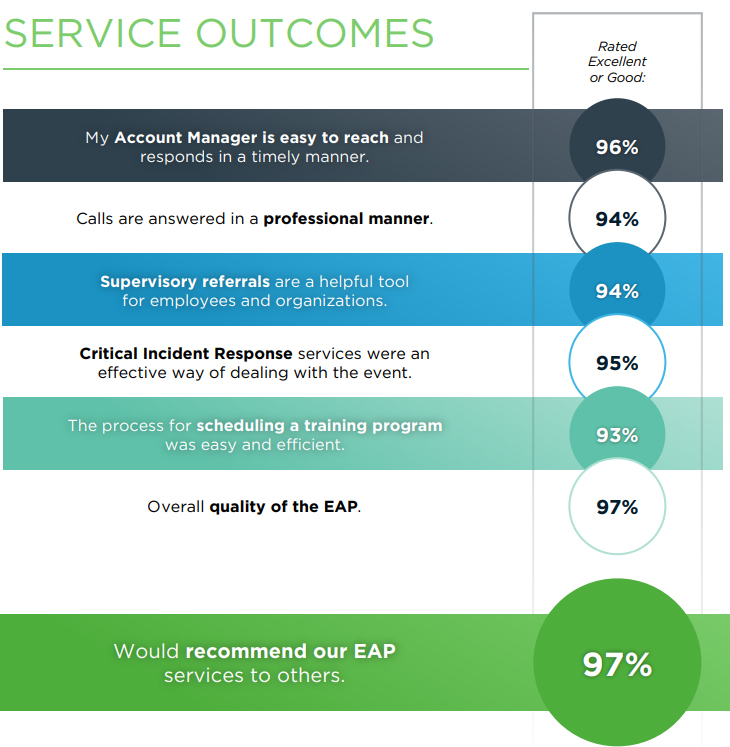
AllOne Health distributed an annual scorecard to all our customer organizations to solicit feedback on our program. Here is a summary of our 2023 results on how our customers rated us:
When surveyed, 99.4 of our customers would recommend AllOne Health’s employee assistance program to others.
The AllOne Health Difference
AllOne Health offers a comprehensive Employee Assistance Program (EAP) services that go beyond mental health to include physical health, finances, family care, and more.
AllOne Health provides 24/7 access to live support and various counseling methods. Learn more and get a free quote here.